Flat roofing is a clever and practical solution to many roofing problems.
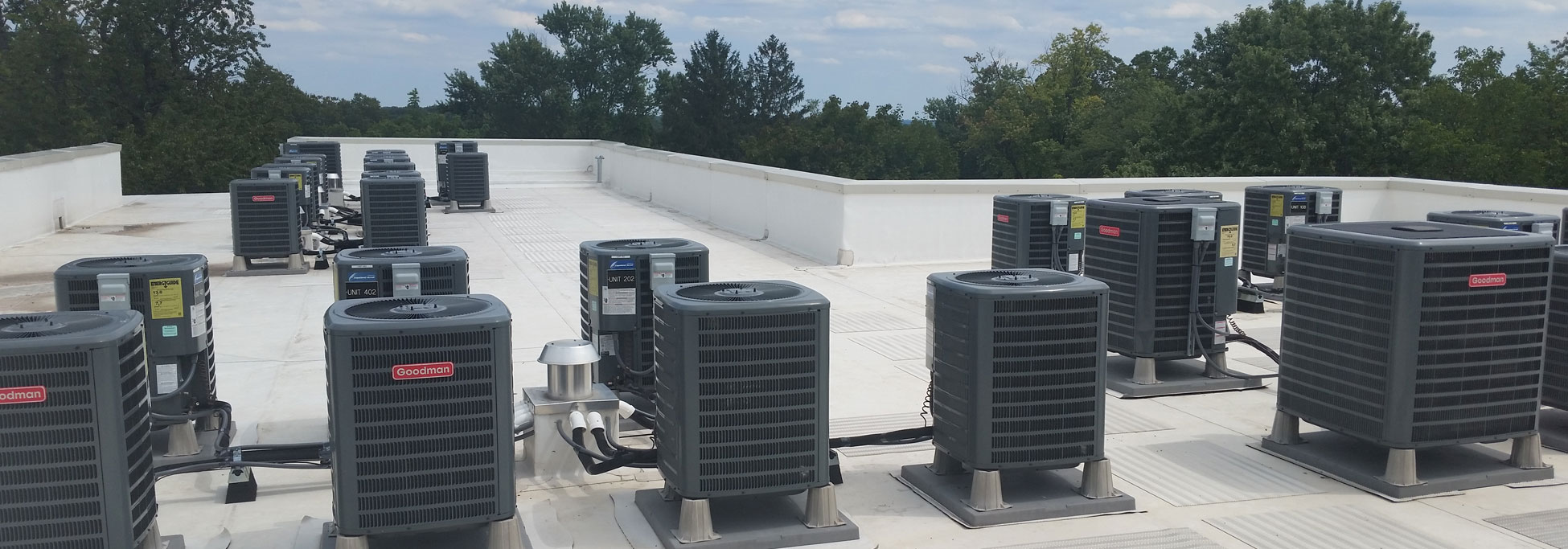
Look around your neighborhood and you’ll likely see a bunch of sloped, pointy roofs. But look around a commercial area full of big buildings and warehouses, and you’ll more likely notice lots of flat roofs. Whether the goal is to make the roof a functional space for HVAC storage or public access, or whether a sloped roof is simply impractical, flat roofing solves a lot of roofing problems. Read on to learn about what flat roofs can do and the different varieties we offer here at Topper Construction.
Why Flat Roofing?
The purpose of a sloped roof is to allow precipitation and debris to roll off, preventing roof leaks or excess weight from accumulating on top of a building. The generally accepted slope of a roof to allow runoff is around 1” of slope per 1’ (12”) of width, meaning that, for example, a 120’ wide roof would have to be at least 10’ tall. But imagine a large retail space or warehouse that’s hundreds, if not thousands of feet wide. A 1000’ building (not uncommon for warehouses) would need a roof over four stories tall just to accomplish adequate drainage. That’s simply impractical. Flat roofing is made from specialized materials and allows for alternative and strategically placed roof drainage on high-square-footage buildings. Also, as we mentioned above, flat roofing can make the top of a building more functional than a sloped roof could accomplish.
Are Flat Roofs Really Flat?
Good question! The answer is no, not really. That’s why, on our flat roofing product page, you’ll also see it referred to as “low-sloped roofing.” Rather than the one massively tall roof we hypothesized about in the previous section, flat roofing creates many subtly sloped sections of a roof that run off into built-in roof drains. This accomplishes the goal of drainage without having to add unnecessary height to a building.
Types of Flat Roofing
Topper Construction are certified installers of Firestone EPDM and TPO products. These are single-ply roof membranes that perform the same function but have a few differences. Here’s a breakdown:
- Ethylene Propylene Diene Monomer (EPDM): Ethylene, propylene, and diene compounds mix together to form a synthetic rubber material used as a membrane on flat roofs. It handles weathering from UV rays, rain, and snow, is available in white or black, and is a highly durable option.
- Thermoplastic Polyolefin (TPO): TPO does largely the same thing as EPDM, but is made of a different mixture of ingredients. It’s a relatively new solution for flat roofing, but is gaining steam due as an environmentally friendly option, due to the fact that it doesn’t include any plasticizers.
Flat Roofing with Topper Construction
Founded in 1988, Topper Construction has quickly grown to become one of the largest roofing and siding contractors in the Mid-Atlantic region thanks to our commitment to providing clients with quality work at a competitive price. We install the full range of vinyl siding from major brands, giving you a wide variety to choose from.
For immediate assistance or questions about siding, please call 301-874-0220. We are headquartered in Frederick, Maryland with a satellite office in Pittsburgh to help us better serve you, our customers. We proudly service areas throughout Maryland, Pennsylvania, Washington DC, Northern Virginia, West Virginia, and Delaware.