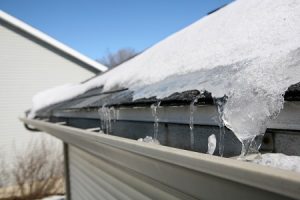
Have you noticed standing water collecting on your flat roof? It might be from melting ice and snow.
Have you noticed standing water collecting on your flat roof? Whether your flat roof is attached to your home or your business, allowing the water to pond can lead to some devastating consequences. Let’s have a closer look at these results, and what you can do to prevent them from ever happening.
How Standing Water Collects
Even in winter, you can still expect day-long rainstorms. Did such a storm happen recently? That can lead to the formation of standing water. Another way that water begins ponding is after the snow on your flat roof melts, and it can’t drain away, perhaps due to the presence of ice dams. Even though you may not realize it, flat roofs are designed to have a small slope to prevent the effects of standing water and ponding. If you notice that there is too much water on your roof, then it could indicate potential problems with your building’s drainage system.
What Can It Do?
Here are the consequences of standing water that we mentioned earlier:
Accumulate Dirt: Dirt buildup can lead to plants growing on your roof where you may not want them to, or also cause mud to accumulate and lead to cracks developing in the roof.
Increase Sun Damage: While you might think sun damage in winter time isn’t as common as it would be in the summer, you still don’t want overexposure to ultraviolet rays cracking your roof.
Accelerate Rusting: Your roof membrane and roof flashing are essential elements of protecting your roof. Don’t let them rust out too soon.
What Should You Do?
First of all, what you should do is to prevent any ponding or pooling at all. Many warranties that come with roof systems stipulate that you can’t leave standing water on your roof for more than two days when the weather outside is dry. Periodically inspect the condition of your roof to ensure all is well.
You should also make sure your gutters aren’t blocked, and any fallen trees, tree limbs, or leaves aren’t the cause of the problem. If you can’t clear away the trees that are in the way, you will need to rely on a trusted roofing contractor, such as Topper Construction and Topper Roofing to address the problems posed by these trees instead.
Contact Topper Construction Today!
If you’re interested in having a roof system, siding, or water drainage system installed in your new home, or would like a free estimate, contact Topper Construction. With Topper Construction, you’ll see the benefit of nearly three decades of experience. Contact Topper Construction at 301-874-0220 or email us at info@topperconstruction.com if you are interested in learning more. We can help you with projects in Delaware, Maryland, Pennsylvania, West Virginia, and Northern Virginia.