By monitoring your asphalt roof for signs of moss, mildew, and algae growth, you can make sure that it stays looking as good as the day it was first installed.
What is your roof made of? No matter what material you use to tile your roof, you should constantly keep an eye on it. By monitoring your asphalt roof for signs of moss, mildew, and algae growth, you can make sure that it stays looking as good as the day it was first installed.
Dealing with Moss
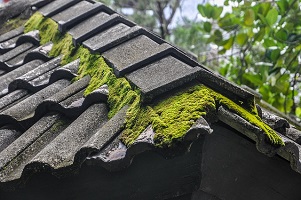
It might seem more like a fungal growth, but moss is actually a plant. It particularly likes to hide out of sight in places that are dark and moist; moss will also take advantage of any shade provided to it by the trees near your house. Unfortunately, summer humidity helps the moss thrive. If your asphalt roof faces north, then it is much more likely you will come across a patch of moss than if your roof faces south. The longer moss stays on your roof, the more damage it can do. At some point, your asphalt roof shingles will be ruined.
This problem is due to the inevitable curling effect that can weaken the integrity of the shingle, causing them to be ripped off by strong winds. Excess moss growths will also block the passage of water, potentially interfering with the function of your gutters and causing water damage to both your roof and your siding. To get rid of moss, use a leaf blower.
Addressing Algae
At first glance, you might think the algae on your asphalt roof is mold. Algae thrive in coastal communities and love areas where it is exceedingly humid. You often won’t be able to see algae bloom until it has already been there for months or years. The wind can help spread the growth of algae, along with the critters that wander around your neighborhood.
On the one hand, the algae can’t actively cause any harm to your asphalt roof. The real problem is that it becomes an eyesore if left alone for too long. Cleaning your roof with an even-parts mixture of bleach and water will be enough to get rid of the algae. Be sure to rinse away the residue once you’re finished, and make sure that your gutters are clean and free of debris. While this sounds effort-intensive, you can minimize the presence of algae on your roof.
Contact Topper Construction Today!
If you’re interested in having skylights, a roof system, siding, or water drainage system installed in your new home, or would like a free estimate, contact Topper Construction. With Topper Construction, you’ll see the benefit of nearly three decades of experience. Contact Topper Construction at 301-874-0220 or email us at info@topperconstruction.com if you are interested in learning more. We can help you with projects in Delaware, Maryland, Pennsylvania, West Virginia, and Northern Virginia.